
AIOS Command
AIOS Command
+
Kustomer
Kustomer
Integration available

Connect Kustomer
to AIOS Command

Your Kustomer holds years of customer timelines nobody has analysed at scale. Command reads every conversation, every shortcut, every customer attribute, and surfaces the churn signals and revenue patterns your support team never had time to review.


Trusted by

Cyber Essentials
99.5% Uptime SLA
£2B+ Client Revenue Managed
UK-Based Servers

Command found these insights in a single Kustomer org within one hour

Hidden churn signals

1,860 conversations analysed, 124 customers showing early churn indicators, 41 with unresolved escalations older than 7 days - from timeline data alone.

One Kustomer org. 1,860 conversations. One hour.

Missed upsells

8 customer segments repeatedly asking about features on higher plans. 29 accounts with usage patterns that suggest upgrade readiness. All invisible until now.

Shadow Notes read between the timeline events.

Resolution leakage

46% of your conversations require more than 4 messages to resolve. The rest contain repeated questions, slow handoffs across teams, and shortcuts nobody updates.

First insights within 48 hours.
Watch: How AIOS Command works with Kustomer
How does AIOS Command work with Kustomer?
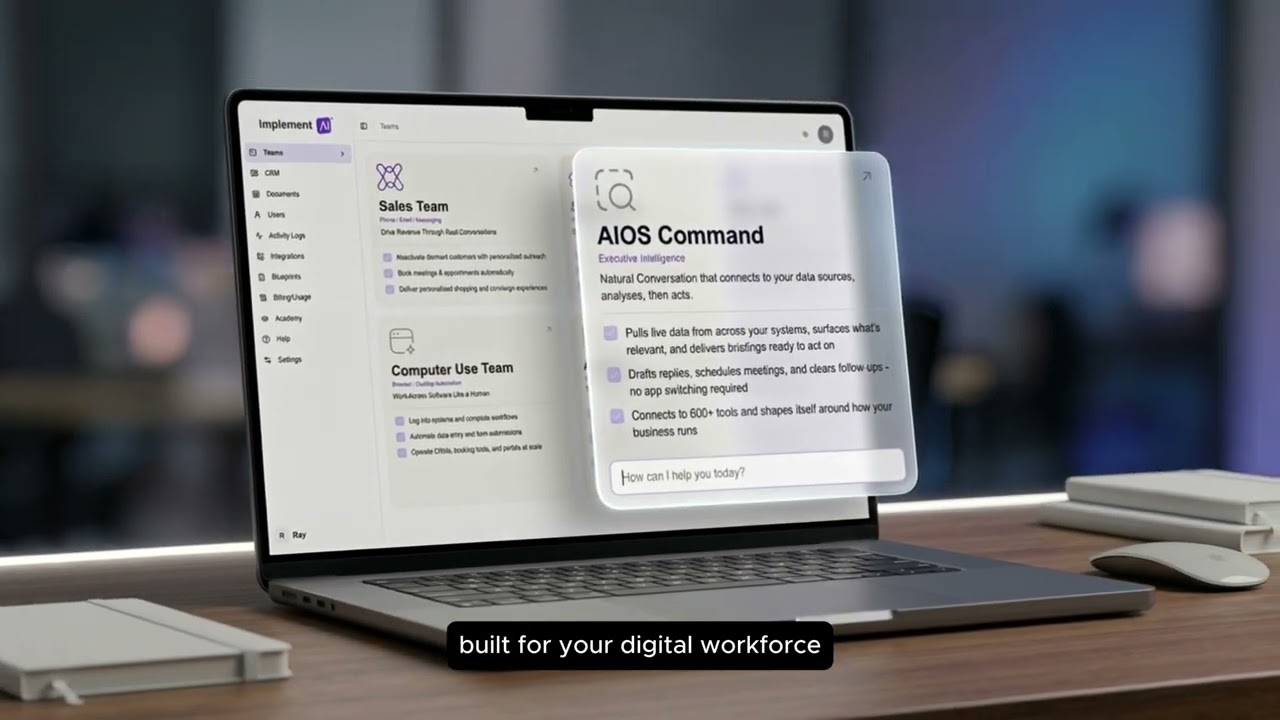
AIOS Command connects directly to your Kustomer org via secure API authentication. It analyses your entire conversation and customer timeline history in minutes, extracting sentiment patterns, resolution velocity, churn indicators, and upsell signals. Command then surfaces these insights as shadow notes, identifies at-risk customers, and recommends actions to reduce churn and grow expansion revenue. Updates sync to Kustomer as internal notes and timeline events, so when Command flags an at-risk account, your team sees it next to the conversation. No data is copied to external servers - analysis happens in your workspace.

Updated

Welcome to the future of work
Your AI team is ready
1 integration connected · Kustomer synced
Morning
General
Morning Briefing
Conversation Triage
Meeting Prep
Quick Wins
What would you like your digital workforce to do?

Ask Command about your Kustomer

What happens today

Every morning your team opens Kustomer and scans timelines trying to spot unhappy customers. Most days they miss the ones who have gone quiet. Churn signals hide in conversation tone. Upsell opportunities sit in feature requests nobody aggregates.

You have 1,860 conversations across your org. You have no idea which customers are about to leave versus which ones are ready to upgrade. Your customer health scores are a guess. Your true retention picture lives buried in timeline events, and nobody reads them all.

Every week those 124 at-risk customers sit uncontacted is another week of revenue walking out the door while your team triages the loudest tickets.

1
Scan the conversation queue for angry or frustrated messages
2
Click into customer timelines one by one to check sentiment and history
3
Rely on customers to tell you they are unhappy before acting
4
Miss upsell signals because feature requests are not aggregated
5
Customer health remains a guess until they cancel

What Command sees in your Kustomer

Command doesn't just read conversations. It infers. It analyses your entire Kustomer org once and extracts patterns in customer sentiment, resolution velocity, and engagement health that no queue scan can capture.

Shadow Notes surface what customers are not saying directly. Churn intelligence emerges from timeline patterns alone. Your digital twin knows which accounts are at risk, which customers are ready to upgrade, and which conversation topics are costing you the most.

Within 48 hours, Command maps your customer health: 1,860 conversations analysed, 124 churn risks flagged, 29 upsell opportunities identified, 8 problem topic clusters surfaced.

Digital Twin Extracted
40+
engagement rules
1,860
conversations analysed
124
churn risks flagged
Real-time
shadow notes

The two digital workers in Command

Insight Team

Watches every conversation, surfaces what you are missing. Extracts customer patterns, identifies churn signals, surfaces recurring issues, finds upsell opportunities.

Reads your entire Kustomer history in minutes
Analyses 1,860+ conversations for sentiment and intent
Flags 124 customers showing early churn indicators
Maps resolution patterns across your support agents
Generates shadow notes on every at-risk account

Action Team

Drafts follow-ups in your voice, handles scheduling, reactivates cold threads, manages commitments.

Recommends retention actions for at-risk customers
Prepares personalised outreach for upsell-ready accounts
Alerts your team to unresolved conversations automatically
Surfaces feature request patterns for product teams
Syncs directly to Kustomer as internal timeline notes

Before and after Command

Before Command
Conversations sit unread for days
No visibility into who never got a follow-up
Escalations arrive, get no priority routing
Internal notes written from scratch
Customer health is disconnected from conversations
Nobody tracks the promises agents made on chat
Retention intelligence costs a full quarter
After Command
Analysed in minutes, retention notes prepared automatically
Complete sweep identifies every at-risk account
Every escalation gets prioritised within 30 minutes
Notes prepared in your team's voice, ready to send
True health score emerges from timeline data alone
Every promise tracked, unfulfilled actions surfaced
Retention intelligence costs 48 hours

What Command can do with your Kustomer

Auto-draft retention notes

Command writes shadow notes on every at-risk customer and recommends retention actions your agents can act on immediately.

Track every conversation

Flags timelines going cold, escalations stalling, and shortcuts that no longer match the questions customers ask. Nothing slips through.

Rescue at-risk accounts

Reads the full timeline of a stalling customer and drafts a warm re-engagement message with real context.

Search everything instantly

Find any conversation by customer, topic, date, or sentiment across your entire Kustomer org in seconds.

Common questions about Kustomer integration

Is my Kustomer data stored outside Kustomer?

Your data remains in your Kustomer org. Command analyses it using secure API authentication. No conversations are copied to external servers. Your data stays yours.

Can Command reply to customers automatically?

Command does not send messages on your behalf. It surfaces insights, flags at-risk accounts, and recommends actions. Your team stays in control of every customer interaction.

How long does it take to connect Kustomer?

Two minutes. You generate an API key in admin settings, and Command begins analysing your org immediately. You will see your first actionable insights within 48 hours.

Does this replace my customer success platform?

No. Command builds intelligence from your Kustomer data that your existing tools cannot surface. It finds sentiment patterns, uncovers churn signals, and identifies upsell opportunities. Think of it as the digital worker that watches your conversations.

Does it work with Kustomer's custom attributes and KObjects?

Command reads all standard attributes, custom attributes, and KObject data in your org. Whatever your team captures in customer profiles, Command analyses it. Your setup stays the same.

Can I revoke access at any time?

Yes. Command uses revocable API keys. You can delete the key anytime in your Kustomer admin settings. Command stops working immediately.

Does Command read conversations across channels?

Yes. Command analyses email, chat, SMS, voice, and social channel conversations together. It detects patterns regardless of channel and flags health risks across the entire customer timeline.

Connect your Kustomer. See what's hiding.

Your conversations know more than your dashboard. Command finds the customer signals hiding in 1,860 conversations, 124 churn risks, and 46% of conversations needing more than 4 messages to resolve.

One-click OAuth. Live within 48 hours. No IT team required.

Command also connects with

Gmail Gmail Slack Slack HubSpot HubSpot Google Calendar Google Calendar Salesforce Salesforce Microsoft Outlook Microsoft Outlook