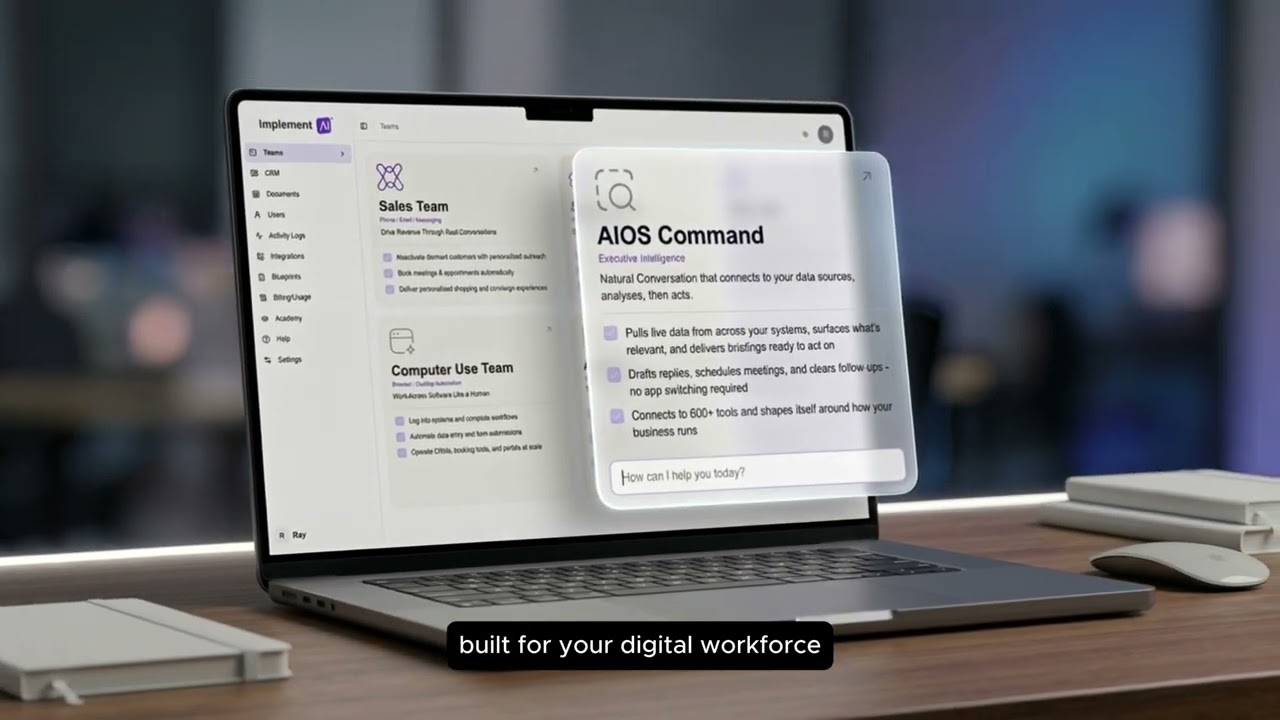
AIOS Command
AIOS Command
+
Sentry
Sentry
Integration available

Connect Sentry
to AIOS Command

Your error tracker holds two years of stack traces, regression patterns, and customer-facing crashes nobody has ever triaged. Command reads every issue, breadcrumb, and release marker, and turns it into the engineering intelligence your product leadership always wanted.


Trusted by

Cyber Essentials
99.5% Uptime SLA
£2B+ Client Revenue Managed
UK-Based Servers

Command found these insights in a single Sentry account within one hour

Hidden regressions

23 issues regressed silently after a recent release, 14 customer-facing crashes never escalated, and 8 errors affecting more than 1% of sessions.

One Sentry account. One sweep. One hour.

Triage drift

47 issues unassigned for more than 30 days, 19 marked resolved but still firing, and 6 with no ownership rule at all.

Shadow Notes read between the breadcrumbs.

Release intelligence

38% of your error volume comes from releases never tied to a regression review. The rest contains noisy issues that should be filtered and silent failures nobody owns.

First insights within 48 hours.
Watch: How AIOS Command works with Sentry
How does AIOS Command work with Sentry?
AIOS Command connects directly to your Sentry account via secure OAuth authentication. It reviews your full error history, release markers, performance traces, and ownership rules. Command then surfaces patterns your engineering team cannot see in dashboards, including issues unassigned for weeks, regressions hiding behind ignored alerts, and customer-facing errors no one has tied back to a release. Updates flow back into your Sentry workspace, so when Command drafts a triage summary or links an issue to an owner, it appears as an action ready for review. No error data is copied to external servers - analysis happens in your workspace.
Welcome to the future of work
Your AI team is ready
1 integration connected · Sentry synced
Morning
General
Morning Briefing
Inbox Triage
Meeting Prep
Quick Wins
What would you like your digital workforce to do?

Ask Command about your Sentry

What happens today

Every Monday someone in engineering opens Sentry, scrolls the issue list, and tries to triage what blew up over the weekend. Most weeks they give up halfway. Regressions hide. Customer-facing crashes stay unassigned. The real story of release quality never makes it past the squad standup.

You have thousands of issues buried in Sentry. You have no idea which regressions are hiding in noise, which customer crashes are sitting unowned, or which releases quietly broke something. Your dashboards reflect last sprint, not the regression that fired ten minutes ago. Your true error reality lives only in Sentry, and nobody can see it.

Every day those 14 customer-facing crashes stay unassigned is another day of churn risk you'll only see when the support tickets land.

1
Open Sentry, scroll through the issue list
2
Manually filter by environment, release, and tag
3
Chase squads for ownership decisions that never come
4
Miss the regression that fired during a release
5
Release-quality signal never lands in the leadership review

What Command sees in your Sentry

Command doesn't summarise issues. It infers. It reads your Sentry account once and extracts 40+ behavioural rules that describe your error patterns, your release cadence, and your true triage discipline.

Shadow Notes surface what stack traces aren't saying. Release intelligence emerges from issue flow alone. Your digital twin knows which regressions hid in the noise, which customer-facing crashes are about to surface in support tickets, and which releases quietly broke a critical path.

Within 48 hours, Command builds you an error ledger from Sentry data alone: 47 issues unassigned, 23 silent regressions, 14 customer-facing crashes, 8 high-impact errors.

Digital Twin Extracted
40+
release rules
Thousands
issues reviewed
47
unassigned for 30+ days
Real-time
regression alerts

The two digital workers in Command

Insight Team

Watches every issue and release, surfaces what your engineering team is missing. Extracts patterns, identifies regressions, surfaces shadow notes, finds release risk.

Reads your entire Sentry history in minutes
Identifies 47+ issues unassigned for over 30 days
Flags 23 silent regressions tied to recent releases
Builds 40+ behavioural rules from your error patterns
Generates shadow notes on every release marker

Action Team

Drafts triage summaries, prepares ownership reassignments, manages release notes for high-impact issues, handles regression follow-ups.

Drafts triage notes that match your engineering tone
Prepares responses to every customer-facing crash
Manages release-impact reminders automatically
Reactivates stalled triage on unassigned issues
Syncs directly to your Sentry issue activity

Before and after Command

Before Command
Regressions surface only when customers complain
No visibility into customer-facing crashes nobody owns
Issues marked resolved keep firing in production
Triage notes written from scratch every standup
Dashboards are disconnected from release reality
Nobody tracks issue ownership over time
Release intelligence costs sprints
After Command
Regressions flagged within minutes of each release
Complete sweep identifies every unowned customer crash
Every still-firing resolved issue surfaced within 48 hours
Triage notes drafted in your engineering tone, ready to review
True release reality emerges from Sentry data alone
Every ownership gap tracked and surfaced
Release intelligence costs 48 hours

What Command can do with your Sentry

Auto-draft triage summaries

Command writes structured triage notes in your engineering tone and drops them into your Sentry issue activity, ready to review and send.

Track every regression

Flags issues regressed after a release, customer-facing crashes nobody owns, and resolved issues still firing in production. Nothing slips through.

Surface silent customer impact

Reads the full breadcrumb history of every issue and drafts a clear case for prioritisation with real release context.

Search every issue instantly

Find any issue by release, environment, owner, or impact across your entire Sentry history in seconds.

Common questions about Sentry integration

Is my error data stored outside Sentry?

Your records remain in your Sentry account. Command analyses them in your workspace using secure OAuth authentication. No error data is copied to external servers. Your data stays yours.

Can Command draft triage notes that sound like my engineers?

Yes. Command extracts your communication patterns, prioritisation tone, and decision velocity from your existing issue activity. It builds a digital twin of your engineering voice, so every draft sounds like your team wrote it.

How long does it take to connect Sentry?

One click. You authorise Command via OAuth, and it begins analysing your issues immediately. You will see your first actionable insights within 48 hours.

Does this replace my observability stack?

No. Command builds intelligence from your Sentry data that your dashboards do not surface. It finds silent regressions, uncovers ownership gaps, and reveals release signals dashboards miss. Think of it as the digital worker that audits your error tracker.

What about Sentry self-hosted vs. cloud?

Command works with both. It connects to your Sentry organisation directly. Whether you use Sentry SaaS or a self-hosted deployment, Command reads the same data.

Can I revoke access at any time?

Yes. Command uses standard OAuth. You can revoke access anytime in your Sentry account settings. Command stops working immediately.

Does Command handle multiple projects and environments?

Command reads your entire Sentry organisation, including all projects, environments, and releases. It does not filter - it analyses patterns across every issue you have ever tracked.

Connect your Sentry. See what's hiding.

Your error tracker knows more than your dashboards. Command finds the release signals hiding in 47 unassigned issues, 23 silent regressions, and 38% of error volume tied to releases never reviewed.

One-click OAuth. Live within 48 hours. No IT team required.

Command also connects with

Gmail Gmail Slack Slack HubSpot HubSpot Google Calendar Google Calendar Salesforce Salesforce Teams Microsoft Teams