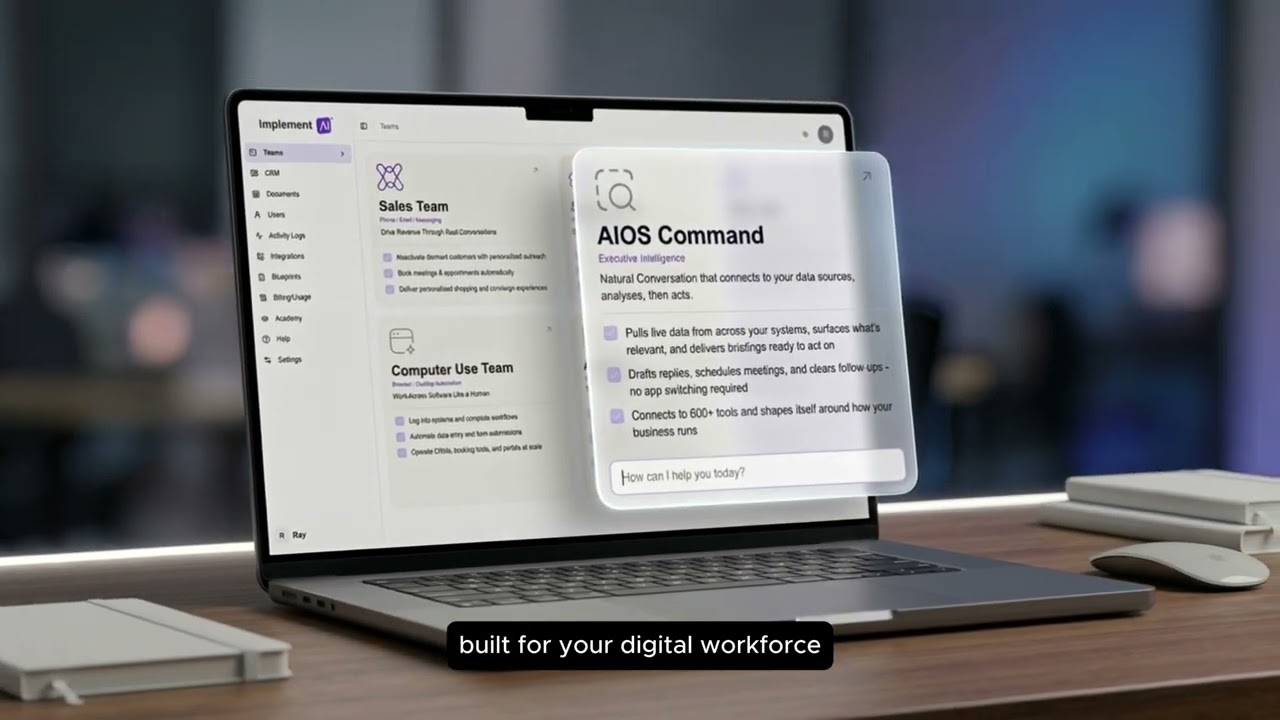

AIOS Command
AIOS Command
+
SendGrid
SendGrid
Integration available

Connect SendGrid
to AIOS Command

Your SendGrid account holds three years of delivery telemetry nobody has ever interrogated. Command reads every send, finds every silent failure, and builds a deliverability picture your dashboards never surfaced.


Trusted by

Cyber Essentials
99.5% Uptime SLA
£2B+ Client Revenue Managed
UK-Based Servers

Command found these insights in a single SendGrid account within one hour

Hidden bounces

1,200 soft-bounce patterns flagged, 84 domains quietly filtering your sends, 22 high-value recipients never receiving your messages.

One account. One sender. One hour.

Silent failures

Two transactional templates failing for 6% of users with no alerts. Password resets, invoices, and trial expiry mails vanishing into spam folders.

Shadow Notes read between the events.

Revenue recovery

39% of your sends arrive after the user has lost interest. The rest contains delivery patterns, throttling risks, and reputation signals worth thousands.

First insights within 48 hours.
Watch: How AIOS Command works with SendGrid
How does AIOS Command work with SendGrid?
AIOS Command connects directly to your SendGrid account via secure API key authentication. It analyses your entire send history in minutes, extracting delivery telemetry, bounce patterns, engagement signals, and silent template failures. Command then surfaces these insights as shadow notes, identifies at-risk domains, and drafts deliverability fixes in your team's voice. Updates sync bidirectionally, so when Command flags a template issue, it appears in your SendGrid workspace ready for review. No data is copied to external servers - analysis happens in your workspace.
Welcome to the future of work
Your AI team is ready
1 integration connected · SendGrid synced
Morning
General
Deliverability Briefing
Bounce Triage
Template Review
Quick Wins
What would you like your digital workforce to do?

Ask Command about your SendGrid

What happens today

Every week your team logs into the SendGrid dashboard trying to spot deliverability drift. Most weeks they skip it entirely. Bounces accumulate. Templates fail silently. Users never receive critical messages for months and years.

You have 1,200 soft-bounce signals buried in event data. You have no idea which transactional templates are failing for which users. Your dashboards show aggregate metrics, not the silent edge cases. Your true delivery health lives only in raw event logs, and nobody can see it.

Every week those 22 high-value recipients sit in spam folders is another week of revenue walking to a competitor whose mail actually arrives.

1
Scroll through Activity Feed searching for bounce patterns
2
Open Stats tab, slice by template, guess which one is broken
3
Write deliverability fixes from scratch, struggle with tone
4
Miss reputation issues because you ran out of time
5
Silent failures never surface as a board-level issue

What Command sees in your SendGrid

Command doesn't summarise event logs. It infers. It reads your SendGrid account once and extracts 40+ behavioural rules that describe your sender reputation, your delivery velocity, and your transactional reliability.

Shadow Notes surface what your dashboards are not showing. Deliverability intelligence emerges from event data alone. Your digital twin knows which templates are quietly failing, which domains are filtering you, and which recipients have the highest churn risk.

Within 48 hours, Command builds you a deliverability scorecard from event data alone: 1,200 bounce patterns, 84 throttling domains, 22 silent failures, 6 templates needing review.

Digital Twin Extracted
40+
delivery rules
1,200
bounce signals found
84
domains throttling
Real-time
shadow notes

The two digital workers in Command

Insight Team

Watches every email, surface what you're missing. Extracts contacts, identifies patterns, surfaces shadow notes, finds revenue signals.

Reads your entire SendGrid history in minutes
Identifies 1,200+ bounce patterns from event data alone
Finds 22 silent template failures hiding in plain sight
Creates 40+ behavioural rules from your delivery patterns
Generates shadow notes on every template

Action Team

Drafts follow-ups in your voice, handles scheduling, reactivates cold threads, manages commitments.

Drafts template fixes that match your team's tone
Prepares deliverability reports for every at-risk domain
Manages IP warm-up and throttling automatically
Reactivates suppressed recipients with proper consent flow
Syncs directly to your SendGrid workspace

Before and after Command

Before Command
Bounce reports sit unread for days
No visibility into which templates are silently failing
Domains throttle your mail with no alerts
Deliverability fixes written from scratch
Suppression lists drift from real behaviour
Nobody tracks reputation drift across senders
Deliverability intelligence costs years
After Command
Analysed in minutes, fixes prepared automatically
Complete sweep identifies every failing template
Every at-risk domain gets a remediation plan within 48 hours
Drafts prepared in your team's voice, ready to send
True deliverability picture emerges from event data alone
Every silent failure tracked, every throttling event surfaced
Deliverability intelligence costs 48 hours

What Command can do with your SendGrid

Auto-draft deliverability fixes

Command writes targeted template and configuration fixes in your team's voice and surfaces them in your SendGrid workspace, ready to review and ship.

Track every template

Flags transactional sends with rising bounces, low opens, and reputation drift. Nothing slips through.

Reactivate suppressed recipients

Reads the full event history of a suppressed contact and drafts a compliant re-permission flow with real context.

Search every event instantly

Find any send by recipient, template, status, or webhook event across your entire SendGrid history in seconds.

Common questions about SendGrid integration

Is my SendGrid data secure with Command?

Your message data remains in your SendGrid account. Command connects via SendGrid API keys with read-only scopes by default. No message bodies or recipient PII are stored on our servers. Data is analysed in real-time and never persisted. Your security is our compliance priority.

Can Command draft templates that match our brand?

Yes. Command extracts your template tone, structure, and decision velocity from your send history. It builds a digital twin of your brand voice, so every draft sounds like your team wrote it.

How long does it take to connect SendGrid?

One click. You authorise Command via API key, and it begins analysing your account immediately. You will see your first actionable insights within 48 hours.

Does this replace our deliverability monitoring?

No. Command builds intelligence on top of your SendGrid data that monitoring tools do not surface. It finds silent template failures, predicts reputation drift, and surfaces revenue signals that standard reporting misses. Think of it as the digital worker that watches your sender reputation.

Does Command work with SendGrid sub-users and IP pools?

Yes. Command works with the full range of SendGrid objects: sub-users, IP pools, dedicated IPs, dynamic templates, and webhook events. Every data point feeds into deliverability and revenue analysis.

Can I revoke access at any time?

Yes. Command uses standard API keys. You can revoke access anytime in your SendGrid account settings. Command stops working immediately.

Does Command handle SendGrid automations and dynamic templates?

Command reads your entire account, including all sub-users, dynamic templates, and historical events. It does not change your live sends - it analyses patterns across everything you have ever sent or received.

Connect your SendGrid. See what's hiding.

Your event logs know more than your dashboards. Command finds the revenue signals hiding in 1,200 bounce patterns, 22 silent failures, and 39% delayed sends.

One-click OAuth. Live within 48 hours. No IT team required.

Command also connects with

Gmail Gmail Slack Slack HubSpot HubSpot Google Calendar Google Calendar Salesforce Salesforce Teams Teams