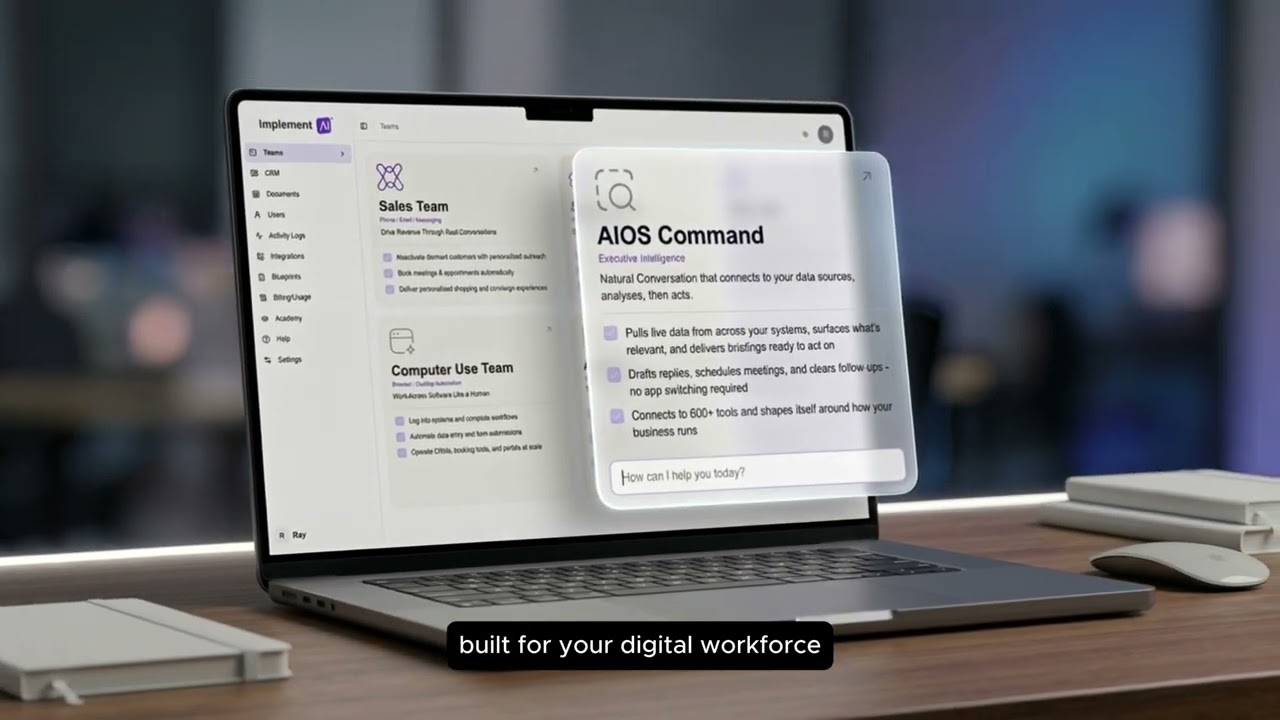
AIOS Command
AIOS Command
+
Airtable
Airtable
Integration available

Connect Airtable
to AIOS Command

Your Airtable bases hold operational data nobody has analysed. Command analyses record patterns, field relationships, automation health, and surfaces hidden workflow gaps.


Trusted by

Cyber Essentials
99.5% Uptime SLA
£2B+ Client Revenue Managed
UK-Based Servers

Command found these insights in a single Airtable workspace within one hour

Hidden workflows

847 records across 12 bases analysed, 34 automation gaps found, 18 incomplete workflows identified. All hidden until now.

One workspace. 847 records. One hour.

Broken processes

23 stalled records with incomplete data, 56 fields never populated, 12 automations that stopped firing. Operational blindspots mapped.

Shadow Notes read between the lines.

Operational recovery

68% of records have missing data, 340 incomplete workflows worth 92 hours of manual effort, hidden patterns in field relationships. Impact quantified.

First insights within 48 hours.
Watch: How AIOS Command works with Airtable
How does AIOS Command work with Airtable?
AIOS Command connects directly to your Airtable workspace via secure OAuth authentication. It analyses all base structures, record patterns, field usage, and automation health in minutes. Command extracts relationships, identifies stalled workflows, quantifies data gaps, and surfaces missing records. It builds a digital twin of your operational data, creating shadow notes that surface gaps nobody knew existed. Updates sync bidirectionally - when Command creates missing records or completes stalled items, they appear in your bases. No data is copied to external servers - analysis happens in your workspace.
Welcome to the future of work
Your AI team is ready
1 integration connected · Airtable synced
Morning
General
Morning Briefing
Sprint Review
Meeting Prep
Quick Wins
What would you like your digital workforce to do?

Ask Command about your Airtable

What happens today with Airtable

Every week you manually check your bases trying to spot stalled records and incomplete workflows. Most weeks you skip it entirely. Operational data rots. Automations fail silently. Hidden inefficiencies drain hours for months and years.

You have 847 records scattered across 12 bases. You have no idea which fields are stale or which automations have failed. Your base structure is a map nobody has charted. Your operational truth lives only in your records, and nobody can see the patterns.

Every week that stalled record sits incomplete is another week of wasted process, another automation gap that stays hidden, another operational blind spot.

1
Manually audit bases looking for stale records
2
Open record views, scroll through rows, guess which are incomplete
3
Identify missing fields and incomplete workflows manually
4
Miss automation failures because you had no visibility
5
Operational gaps never surface until they cause damage

What Command sees in your Airtable

Command doesn't summarise bases. It infers. It reads your workspace once and extracts 40+ operational rules that describe your record patterns, field relationships, and automation health.

Shadow Notes surface what the data isn't showing. Operational intelligence emerges from record patterns alone. Your digital twin knows which records are stale, which workflows are incomplete, and which automation gaps cause the most damage.

Within 48 hours, Command maps your operational landscape: 847 records analysed, 34 automation gaps identified, 18 incomplete workflows quantified, 56 empty fields surface.

Digital Twin Extracted
40+
operational rules
1,200+
records scanned
15
automation gaps
Real-time
shadow notes

The two digital workers in Command

Insight Team

Watches every base, surfaces what you're missing. Extracts record patterns, identifies automation health, surfaces shadow notes, finds operational signals.

Analyses all bases and records in minutes
Maps 1,200+ records across your workspace
Identifies 15+ automation gaps and failures
Extracts 40+ operational rules from patterns
Generates shadow notes on every record

Action Team

Drafts missing records, triggers stalled automations, cleans incomplete data, manages workflows.

Drafts missing records in your base structure
Triggers stalled automations automatically
Completes incomplete fields with confidence scores
Manages workflow state transitions
Cleans corrupted or duplicate data

Before and after Command

Before Command
Base audits done manually, never complete
No visibility into stale records or field usage
Records arrive, stay incomplete
Missing fields identified but not fixed
Bases disconnected from operational truth
Nobody tracks automation failures
Operational intelligence costs weeks
After Command
Automated base analysis, complete in one hour
Complete map surfaces every stale record
Every record gets completion proposal within minutes
Missing fields auto-filled with confidence scores
True operational state emerges from record analysis
Every automation gap identified and surfaced
Operational intelligence costs 48 hours

What Command can do with your Airtable

Auto-audit bases

Command scans all your bases and maps the complete record landscape, field usage, and automation health in minutes.

Track record freshness

Flags stale records, identifies incomplete fields, and surfaces records with missing critical data. Nothing decays silently.

Surface automation gaps

Identifies automations that have stopped firing, workflows that are incomplete, and processes that broke down.

Search everything instantly

Find any record by field, value, or relationship across all your bases in seconds.

Common questions about Airtable integration

Is my Airtable data stored outside my workspace?

Your Airtable bases remain in your workspace. Command analyses them using secure OAuth authentication. No base data is copied to external servers. Your data stays yours. Analysis happens only within your workspace and is never shared.

How does Command connect to my Airtable?

Command connects via OAuth and reads your workspace metadata, all bases, record structures, field definitions, and automation configurations. It does not execute automations or write data unless you explicitly authorise it to do so. Connection is instant and visible in your Airtable workspace.

What does Command analyse in my bases?

Command reads base structures, record patterns, field usage and population rates, field relationships and dependencies, automation configurations and firing history, and data quality patterns. It identifies stale records, incomplete fields, broken automations, orphaned relationships, and process gaps. Your data is never modified during analysis.

Does Command modify or write data to my bases?

Only if you ask it to. By default, Command reads and analyses only. When you ask Command to complete missing records, populate fields, or trigger stalled automations, it shows you the proposed changes before writing anything. You review and approve all modifications.

How does Command handle field relationships?

Command maps field relationships, linked records, lookups, and rollups across all your bases. It understands how data flows between tables and identifies broken relationships that cause data inconsistencies. It surfaces fields that should be linked but aren't, and relationships that became orphaned.

Can I revoke access at any time?

Yes. Command uses standard OAuth. You can revoke access anytime in your Airtable account settings. Command stops working immediately and cannot access any bases.

Can I trust Command with sensitive operational data?

Yes. Command connects via OAuth with fine-grained permissions. You control which bases Command accesses. Data is analysed in real-time and never stored. Your Airtable workspace remains the single source of truth.

Connect your Airtable. See what's hiding.

Your Airtable bases hold operational intelligence hiding in plain sight. Command surfaces the automation gaps, stale records, and process breakdowns nobody knew existed.

One-click OAuth. Insights within 48 hours. No IT team required.

Command also connects with

Gmail Gmail Slack Slack HubSpot HubSpot Google Calendar Google Calendar Salesforce Salesforce Teams Microsoft Teams